Videos

Rafael
Arévalo Ascanio
UAntwerpen
VITO

Modelling the supply chains behind the scenes

Every package you order has a hidden journey—and a carbon footprint 🌍📦 In this short clip, Rafael Arévalo Ascanio (UAntwerp - VITO) explains how supply chains work, what challenges they create, and how he's developing a model to make them smarter and more sustainable.
Razieh
Shafiei Alavijeh
VUB

What are the advantages of fungal leather compared to traditional leather?

Can fungi really replace animal leather? Researcher Razieh (VUB) thinks so. Her work focuses on creating durable, leather-like materials from mycelium — the thread-like structure of fungi — without using synthetic additives. Made entirely from agricultural waste and reinforced with biodegradable fibres, this innovative material offers a cleaner, animal-free alternative to traditional leather.
Eric
Gaba
VUB

Making prosthetic sockets more sustainable using pineapple leaves

Eric Gaba (VUB) is rethinking how we build prosthetic sockets. Instead of carbon fibre, he’s developing an eco-friendly alternative using pineapple leaf fibres and plant-based resin.This biodegradable material is safer, cleaner, and cheaper — especially for clinics in low- and middle-income countries. A fresh take on sustainability in medical design.
Britt
Bocken
UHasselt

EU Green Deal: how to deal with unclear regulations?

How can we refine EU climate policies to better harness forests for capturing and storing carbon? That's the question Britt Bocken is exploring as she investigates the extensive and complex EU Green Deal - the EU's climate policy. She wants to clarify the complexities of this regulation, and examine how countries like Belgium apply the rules in practice, to see if there is room for improvement.
Elvira
Bytyqi
FWO
UGent

Genetically modified yeast helps produce greener products

Did you know that many products in your shopping cart contain 'surfactants'? For example, this 'magic' ingredient provides foaming soap to longer-lasting food! But did you also know that almost half of surfactants come from petroleum? In her research, bioengineer Elvira Bytyqi is working on an eco-friendly alternative: biosurfactants! 🌱
Jasmine
Derop
UGent

No more moldy plants thanks to bacteria?

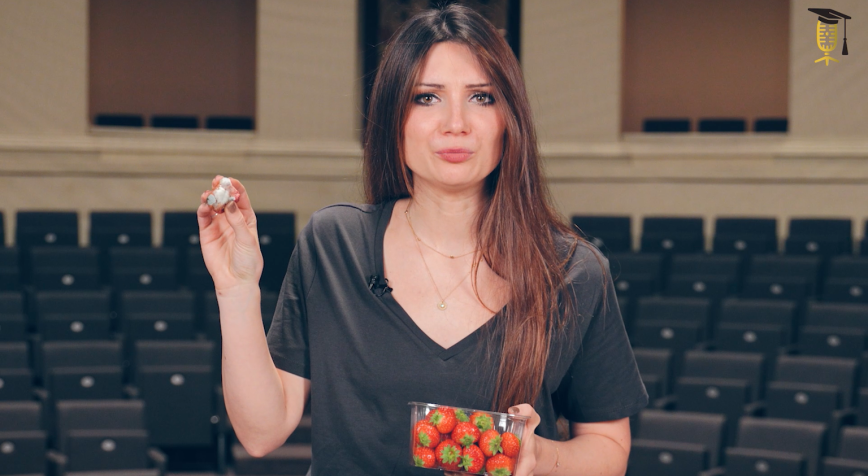
You buy strawberries in the supermarket, but when you want to bite into one of those juicy strawberries at home, you stumble upon a moldy one in the package. Yuck. But did you know that the solution to this problem may be right under our feet? Bioengineer Jasmine De Rop (UGent) explains how soil bacteria might offer an unexpected way to tackle this issue.
Eliza
Van de Sande
FWO
VUB

Cracking the cacao pollinator mystery

Sinterklaas is almost here, and for many in Belgium, it's a time for chocolate. 🍫 But have you noticed chocolate is getting more and more expensive? 💸 Eliza Van de Sande is looking to unravel the mystery behind the cacao pollinators, to make cocoa farming more efficient and cheaper...
Hannelore
Geeraert
FWO
VUB

Bioplastics: the stretch to sustainability

Plastics are everywhere: from the plastic packaging that keeps our food safe and fresh, to, unfortunately, the (micro)plastics that end up in our seas and oceans. "We can't avoid plastics, so we have to improve them," argues Hannelore Geeraert (VUB - FWO). Thus, with the help of bacteria, she worked on biodegradable bioplastics.
Wenjian
Hu
KU Leuven
VITO

Making carbon conversion more efficient

The rise of CO2 levels has many harmful effects on our planet. A part of the solution is capturing CO2 emissions and transforming them into valuable chemicals and fuels, while potentially slowing climate change. Wenjian Hu explains how this carbon conversion works. His research aims to make the process more efficient, paving the way for scaling up from lab experiments to big industrial plants.
Praharsh
Pai Raikar
VITO

How to put wasted heat to good use

Industries release enormous amounts of wasted heat: over 67% of all energy generated worldwide is estimated to be lost as heat! What if we could harness this industrial waste heat to warm our homes? For this, Praharsh Pai Raikar is optimizing the design process of heat exchangers. Heat what?! He will tell you more in this video.
Nico
Peiren
ILVO

Cows contribute to the climate solution

Cows burp - a lot. Those burps contain methane, a potent greenhouse gas that, like CO2, causes global warming. Can we make cows produce less methane? "Yes, by adjusting their feed," Nico Peiren (ILVO) explains in this video.
Elke
Vereecke
ILVO
FWO
UGent

The green gold of the future

Why do scientists sometimes call microalgae "the green gold"? Well, in addition to biofuels and astronaut food, you could use them to make sunscreen. These tiny algae contain substances that protect them from sunlight, which can also come in handy for humans. Unfortunately, they don't naturally produce enough of those substances. Elke Vereecke researches how to grow microalgae packed with those sunlight-protecting components.