Videos

Judith
van Ovost
UGent

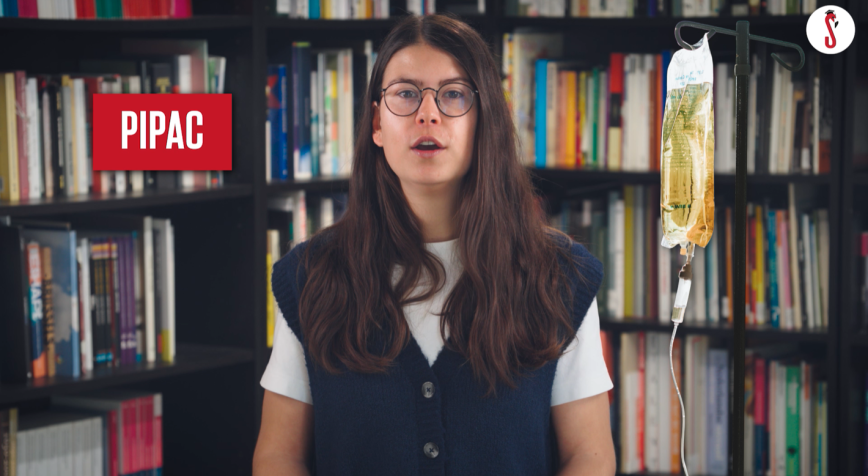
Treating peritoneal cancer: keeping chemotherapy in the abdominal cavity for longer

Have you ever heard of the peritoneum? This thin membrane, measuring about two square metres, lines our abdominal cavity and covers our organs. When cancer spreads to this area, it results in peritoneal cancer: a complex disease that is difficult to treat. Cancer researcher Judith van Ovost explains how she and her colleagues are trying to improve treatment using two new techniques.
Ehsan
Mohammadi
imec
KU Leuven
VITO

Let's start fighting cancer earlier

Too many lives are lost to cancer because it’s found too late. Current detection methods are slow, costly, and sometimes unreliable. But what if our blood holds the key? Researcher Ehsan Mohammadi (VITO - KU Leuven - imec) is exploring how tiny particles released by our cells can signal early signs of cancer.
Cato
van Schyndel
KU Leuven
VITO

What happens to your health data?

Did you know that the data from your sports watch can help detect heart disease? Every day, millions of pieces of health data are collected in Belgium: from your movement and heart rate to your sleep quality and blood pressure. This data is gathered via smartphones, sports watches, and doctors, but often remains fragmented and unused. Via 'We Are', a secure online platform, you can consciously connect and share your health data, as researcher Cato van Schyndel explains.
Jente
Bontinck
Karel de Grote Hogeschool Antwerpen

Stop home nurses dropping out due to pain

Who will care for us... if our nurses themselves are unable to work? No less than 1 in 4 nurses in Flanders suffer from physical complaints due to heavy physical labour, irregular shifts and high work pressure caused by staff shortages. Together with home care organisations, Jente Bontinck and her colleagues are looking at how they can identify pain complaints earlier and prevent them from getting worse. Because good care starts with caring for the caregiver.
Kathleen
Van Royen
Karel de Grote Hogeschool Antwerpen

Better understanding your medical report thanks to AI

"VKF", "ablation"... Do you always understand what is written in your medical report? Researcher Kathleen Van Royen explains how she is working on a solution with the help of AI: an application that automatically translates your medical report into clear, understandable language.
Mauro
Van den Ende
UGent

Why do teens keep walking around with urinary problems?

Almost 1 in 3 teenagers still struggle with urinary complaints, but they carry on without seeking medical help, often out of shame. Urologist Mauro Van den Ende (UGent) wants to break this taboo with his research and thus help teenagers.
Niké
Guilbert
UGent

Gut bacteria leaving packets in our blood: a danger?

Niké Guilbert (UGent) discovered mysterious bacterial packets in the blood of some patients. Danger or medical breakthrough? Find out in this 2-minute video.
Jesse
Demuytere
UGent

The peritoneum as an accomplice for cancer metastasis

In more than 1 in 10 colon cancer patients, metastases emerge to a barely known body part: the peritoneum. Such peritoneal metastases are extremely deadly and difficult to treat. Cancer researcher Jesse Demuytere reveals how the peritoneum is not only a victim, but also possibly a henchman of the cancer cells. Watch the video.
Renée
De Noyette
UGent

Why it's best to hold your breath during breast cancer radiation treatment

In Belgium, one in nine women will develop breast cancer during their lifetime. With radiation, the disease can be treated. Although that radiation can also be harmful to the heart. Fortunately, there is a simple solution: hold your breath! Renée De Noyette (UGent) explains how this works.
Patricia
Clement
UGent

The mystery of menstruation and the female brain

For decades in science, brain research was done primarily on men. As a result, we know surprisingly little about the female brain. Patricia Clement (UGent - UZ Gent) wants to change that.
Alexia
Van de Loock
UGent

Allergy medication may affect your sports training sessions

Playing sports with an allergy? Just ask Remco Evenepoel - that's no fun. But before you reach for your allergy medication, you might want to think twice, says ALexia Van de Loock. She studied how allergy medication affects athletic performance, and it's no fun either.
Ruth
Van Hecke
UGent

Why your organs of balance are more important than you think

In her doctorate at UGent, scientist Ruth Van Hecke studied how balance problems affect children's development, not only physically, but also cognitively. She explains why we should pay much more attention to balance problems in children.