Videos

Dore
Staquet
UHasselt
VITO

Efficient personal data vaults

What if you could store your personal data in your own digital vault and control who accesses it? Computer scientist Dore Staquet is working to make this a reality by solving key challenges, like efficiently retrieving data when hospitals or services need it. His goal? Putting you back in control of your data, without sacrificing speed or convenience.
Pieter-Jan
Piccard
UHasselt
VITO

How AI can help to remove PFAS from groundwater

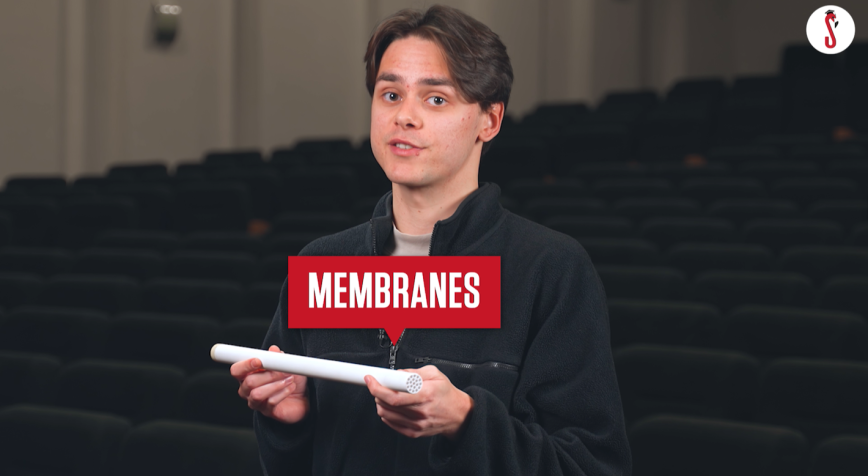
What if we could remove "forever chemicals" from water, without boiling a single drop? PFAS, the notorious "forever chemicals," can linger in groundwater for centuries, posing a major environmental and health challenge. Traditional methods to remove them are energy-intensive and inefficient, but what if there’s a smarter way? Researcher Pieter-Jan Piccard is using machine learning models to design advanced membranes that filter out PFAS and other harmful molecules without the need for boiling.
Tú
Nguyen
UHasselt
VITO

3D-printing for long-lasting batteries

Ever wish your phone battery could last a whole month?  Tú Nguyen (VITO - UHasselt) is working to make that future a reality, using 3D-printing. Watch the video!
Frédérique
Vilenne
UHasselt
VITO

Should we protect your proteins?

🔒 Did you know your DNA is protected by strict privacy laws like GDPR, but your protein data often isn't? When you take part in research studies, protein data can end up in public databases to help scientists find new cures. But what about your privacy? Bioinformatician Frédérique Vilenne, along with ethicists, is working on solutions to protect your data while still driving scientific progress.
Elisa
Duarte
UHasselt

How can we control the impact of air pollution on our health?

Every breath you take is a mix of particles. Some particles are essential to life, like oxygen, but others might be air pollutants from industry or transport that can harm your health. Completely pollutant-free air isn't realistic. While we can’t eliminate it completely, we can lower pollution levels to reduce health risks. That’s where researcher Elisa Duarte (UHasselt) steps in. Watch the video.
Nuran
Caz
UHasselt

Can we beat cancer with chemotherapy in a Trojan horse?

Chemotherapy has been an important weapon in the fight against cancer for decades. But unfortunately, it affects not only cancer cells, but also healthy cells - resulting in severe side effects. Doctoral student Nuran Caz wants to change this with her research. She is working on an innovative therapy in which the chemotherapy, as in the Trojan Horse, is hidden in order to target the unsuspecting cancer cells.
Yana
Vella
UHasselt

How brain cells filter out noise

Ever wondered how you can focus on a conversation with your friend while sitting in a noisy restaurant?

This is thanks to the filtering system in your brain—and a specific protein, the glycine receptor—which helps remove redundant signals. But when this system isn’t working properly, it may contribute to conditions like autism and psychosis. Yana Vella studies this receptor in an ingenious way to better understand how this filtering works and to improve future treatments.

Britt
Bocken
UHasselt

EU Green Deal: how to deal with unclear regulations?

How can we refine EU climate policies to better harness forests for capturing and storing carbon? That's the question Britt Bocken is exploring as she investigates the extensive and complex EU Green Deal - the EU's climate policy. She wants to clarify the complexities of this regulation, and examine how countries like Belgium apply the rules in practice, to see if there is room for improvement.
Imke
Hrycyk
UHasselt

Searching for the best physical training after spinal cord injury

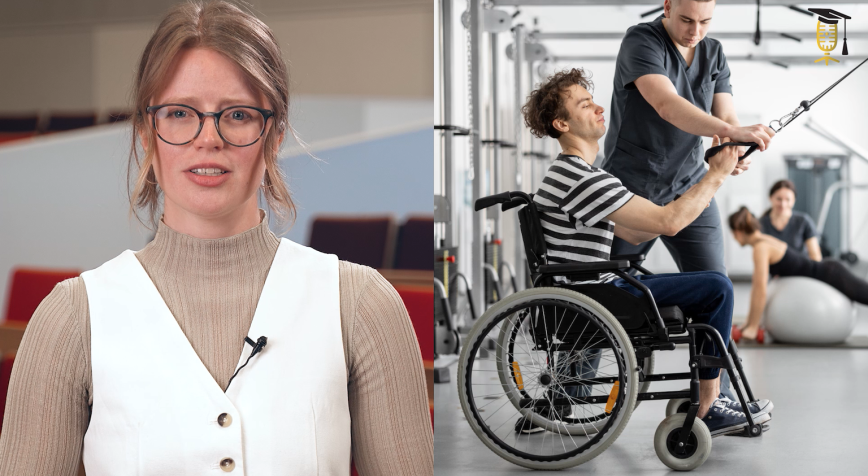
Every year, up to half a million people worldwide suffer spinal cord injuries, often leading to partial or complete paralysis of the arms or legs. Remarkably, physical training can help restore movement and muscle control—even in partially paralyzed limbs. But how does this work? Imke Hrycyk explains the science behind it. Watch to learn more!
Amber
Jans
UHasselt

Dementia's double trouble: navigating between love and law

Amber Jans studies dementia—not as a doctor, but as a legal researcher. While a dementia diagnosis is primarily a medical issue, it also comes with important legal consequences, especially for families. Jans explores the challenges of creating a legal system that considers the interests of the person with dementia, their spouse, and their relationship as a couple.
Lindsay
Everaert
UHasselt

Movement, the fuel for successful learning!

Did you know that you can concentrate better and be more motivated if you learn while moving? Lindsay Everaert tells you why moving while learning is so effective and challenges you with an exercise in the video. Ready to test your brain?
Alejandro
Correa Rojo
UHasselt
VITO

How do my genes describe me and my health?

Why do some people get a cold every month, while others seem immune, even in the wintertime? 🤧 "The answer lies in our genes," says Alejandro Correa Rojo. "Each of us carries a unique genetic code, that can tell how you will respond to a disease." After studying the DNA of thousands of people, Alejandro developed a Genetic Risk Score. This single number tells how you are at risk for a specific disease compared to others. Find out more in the video.